Educate.
Help employers understand how mobile worksite first aid operates, when it's appropriate, and how it can fit into an existing workplace Injury Action Plan.
About Worksite Injury FirstAid
From decades in emergency medical services to a nationwide mission: helping employers make appropriate first-aid response part of every workplace Injury Action Plan.
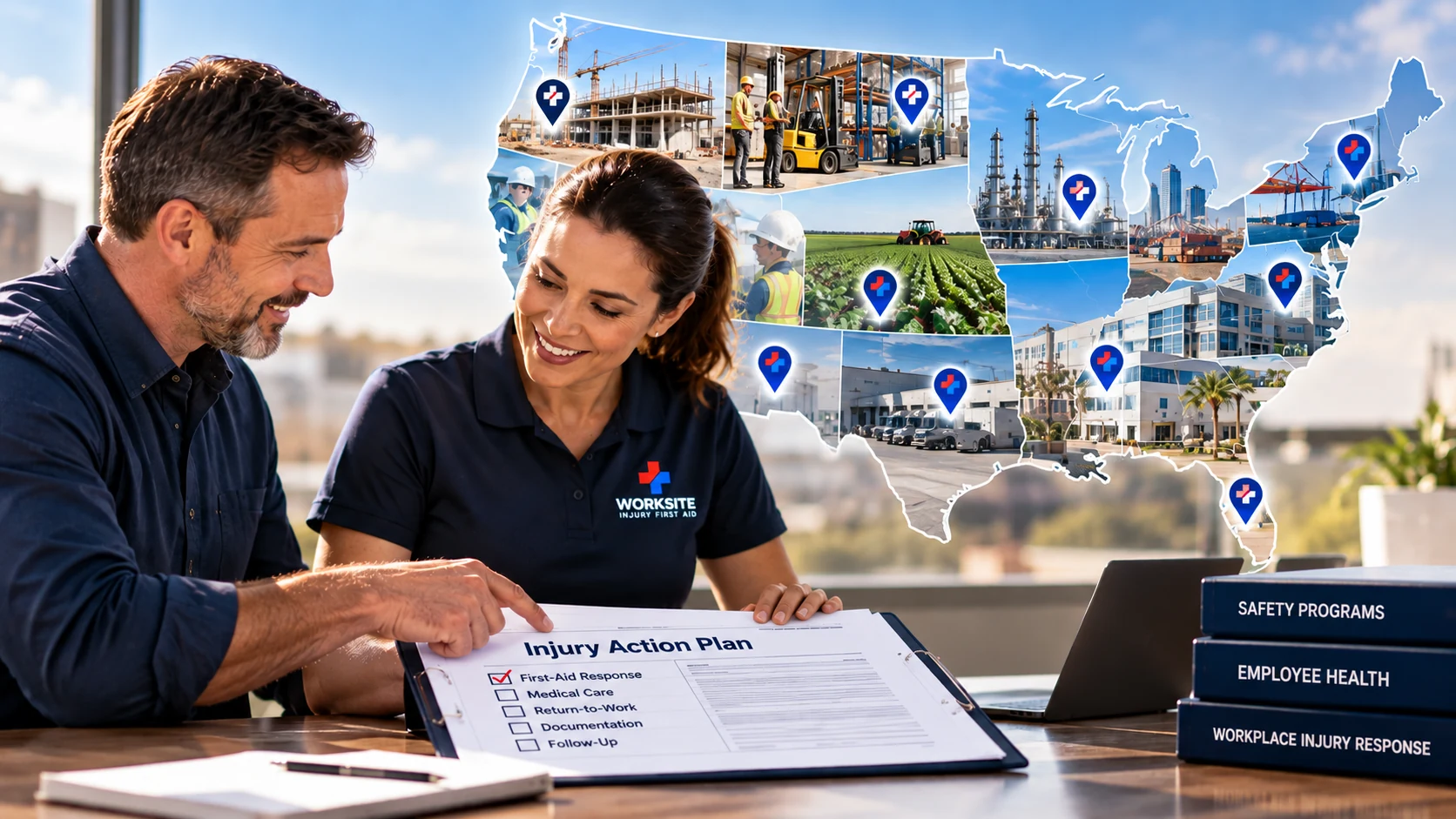
We believe every employer in the United States should include on-site first-aid response as part of its workplace Injury Action Plan.
It's better for business, better for employees, and helps ensure that when an injury occurs, workers have access to timely, appropriate care right where they are.
Our mission is simple: make mobile worksite first aid a recognized, accessible, and routinely used part of workplace injury response across the country.

Our roots are in 911 emergency medical services.
After decades working in emergency response, our team witnessed firsthand how often emergency resources were dispatched to situations that didn't require emergency-level care—and how those decisions could affect people facing genuine medical emergencies.
One experience has stayed with us.
One of our partners was dispatched, lights and sirens, across town to assist a man who had stubbed his toe while walking into his kitchen.
While the crew was assessing him, another call came in just two blocks away. This time, someone was experiencing chest pain. With the nearby crew already committed, the next available ambulance had to respond from much farther away.
By the time help arrived, the patient had gone into cardiac arrest. Tragically, he did not survive.
Meanwhile, the man with the injured toe was transported to the hospital, diagnosed with a bruise, and discharged home.
It's a difficult story, but it illustrates an important lesson: the right resources need to be available for the right situations, at the right time.
Emergency medical systems have increasingly adopted more sophisticated call triage and response protocols to better match resources with patient needs.
Similar challenges exist in urgent care centers and emergency departments, where patients with minor injuries may contribute to already crowded facilities and longer wait times.
Healthcare systems are evolving, but meaningful change takes time.
We believe one important part of that evolution is ensuring that injuries are assessed appropriately and that people receive the level of care their condition actually requires.
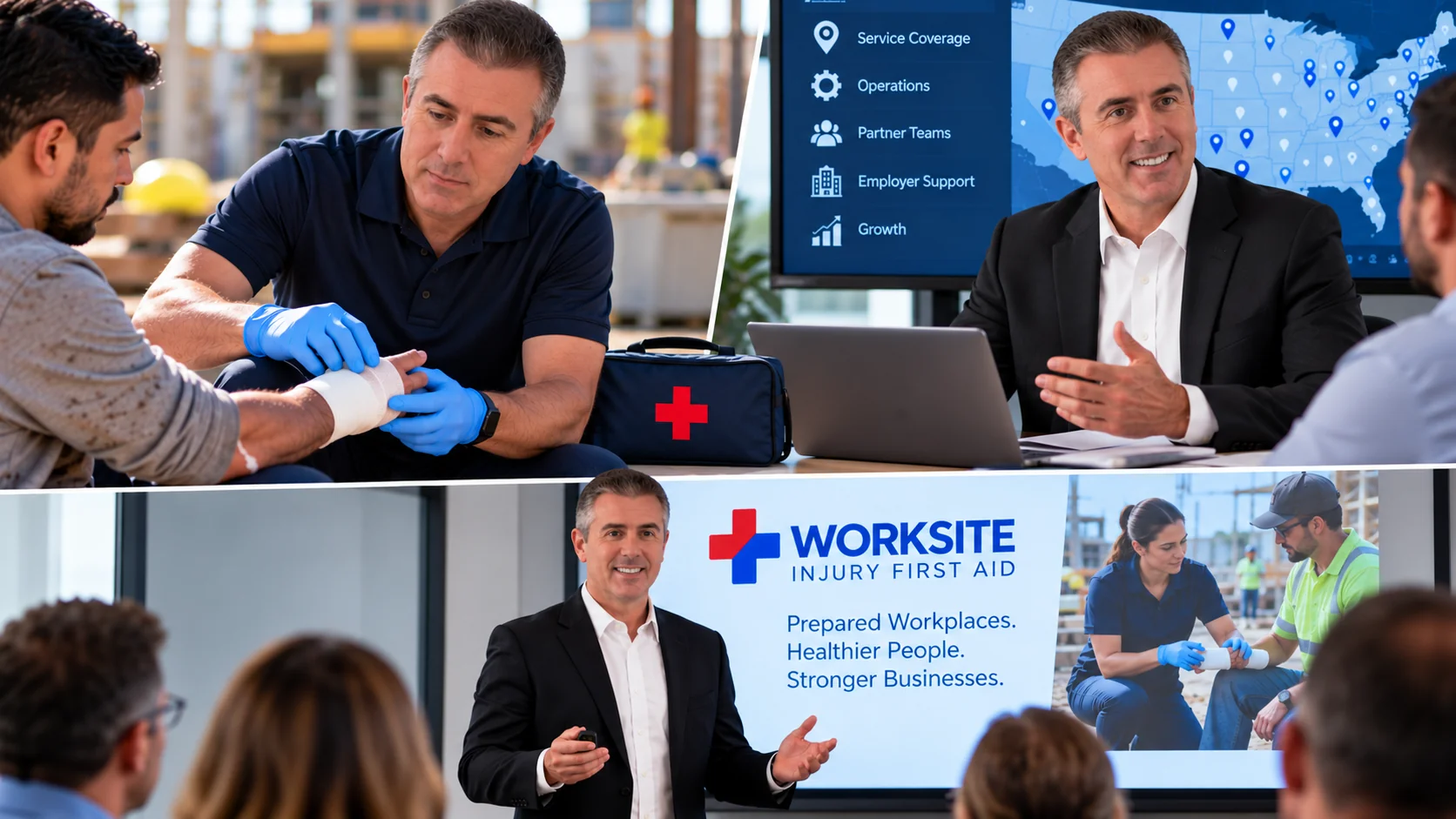
Years ago, while working as a paramedic, I began taking assignments as a mobile first-aid technician, responding to injured employees directly at their worksites.
I quickly realized how much of a difference this service could make.
Instead of automatically leaving the workplace for every minor injury, employees could receive an assessment and first aid right where they worked. When appropriate, they could return to their normal duties without unnecessary disruption.
But what made the biggest impression on me wasn't just what happened during those visits. It was what happened afterward.
When I returned to those same worksites, employees would approach me to share how they were doing.
"Look, I'm good. I kept working, and it healed great."
Some would tell me stories about friends working in the same industry who had experienced similar injuries but followed a very different path.
Their friends had been sent off-site, taken away from work, and sometimes caught up in lengthy treatment and recovery processes that placed significant financial strain on their families.
A few even shared stories about friends who struggled with pain medication afterward and never fully regained the stability they had before their injuries.
Those conversations stayed with me.
I saw firsthand that providing timely, appropriate first aid wasn't just about treating an injury. It could also help employees avoid unnecessary disruptions to their work, income, and everyday lives.
At the time, the company I worked for offered this service in only a couple of geographic areas.
I believed then, as I do today, that employers in every state, city, and county should have access to this kind of response.
Over the years that followed, I moved into operational leadership and helped expand mobile first-aid services to employers across many more regions.
But even as we expanded, I recognized something was missing.
We were focused on delivering the service, building teams, and expanding geographic coverage. What we rarely had enough time to do was educate employers about the service itself—why it mattered, how it worked, and how to successfully integrate it into their existing workplace injury procedures.
I came to believe that expanding access was only half the challenge.
The other half was making sure employers knew the service existed, understood its value, and knew how to use it effectively.
That's what led me to create Worksite Injury FirstAid.
Worksite Injury FirstAid was created to address the education, awareness, and access gap surrounding mobile workplace first-aid services.
We aren't the team responding to injuries. We're the team helping employers discover the service, connect with local first-aid response teams, and prepare their organizations to use it effectively.
Our work focuses on three priorities:
Help employers understand how mobile worksite first aid operates, when it's appropriate, and how it can fit into an existing workplace Injury Action Plan.
Help employers identify and connect with mobile first-aid service teams serving their geographic area.
Provide educational resources and guidance that help employers introduce the service throughout their organizations, from executive leadership and safety departments to supervisors and frontline employees.
Over the years, we've learned that simply establishing an account with a mobile first-aid service team doesn't guarantee employees will benefit from it.
We've seen employers recognize the value, establish service protocols, and announce the program to their workforce—only to find that the service was rarely being used.
Why?
Because the supervisors making decisions when injuries actually occurred didn't always understand the service, when to request it, or how it could help their employees and crews.
So they continued doing what they'd always done: sending injured employees off-site, even for minor injuries that might have been appropriately managed with workplace first aid.
The service was available. The account was established. But the people who needed to use it weren't fully prepared.
That's the gap we're working to close.
Successful implementation requires more than an account number and a phone number to call. It requires awareness, education, clear procedures, and buy-in throughout the organization.
When an injury occurs, everyone involved should understand what to do, whom to contact, and how to get the employee the appropriate level of care.
We envision a future where mobile first-aid response is a familiar, trusted component of workplace injury management throughout the United States.
Where employers have a plan in place before an injury occurs.
Where supervisors understand their options.
Where injured employees receive timely, appropriate care.
And where emergency and higher-level medical resources remain available for those who truly need them.
Our goal is to help make that future a reality—one employer, one worksite, and one community at a time.
Take the next step toward making mobile first-aid response part of your company's workplace Injury Action Plan.
Get Your Company Set Up