

Oil/Gas
A Cut Forearm, Not a Rig Sitting Idle
At a glance
- Injury:
- Small, gaping cut to the forearm
- Care provided:
- Assessment, appropriate cleaning of the cut, wound closure strips, and a sterile dressing
- Outcome:
- Managed with first aid; employee continued working with minimal disruption.
The situation
An employee on a well servicing crew was breaking out a pipe connection when the wrench slipped and their forearm struck the sharp edge of a flange. The result was a small cut with edges that pulled apart, smeared with oil and grit. A coworker offered to wrap it in duct tape so the crew could keep going. That's a common instinct, but taping over a dirty cut can trap oil and dirt in the wound.
The response
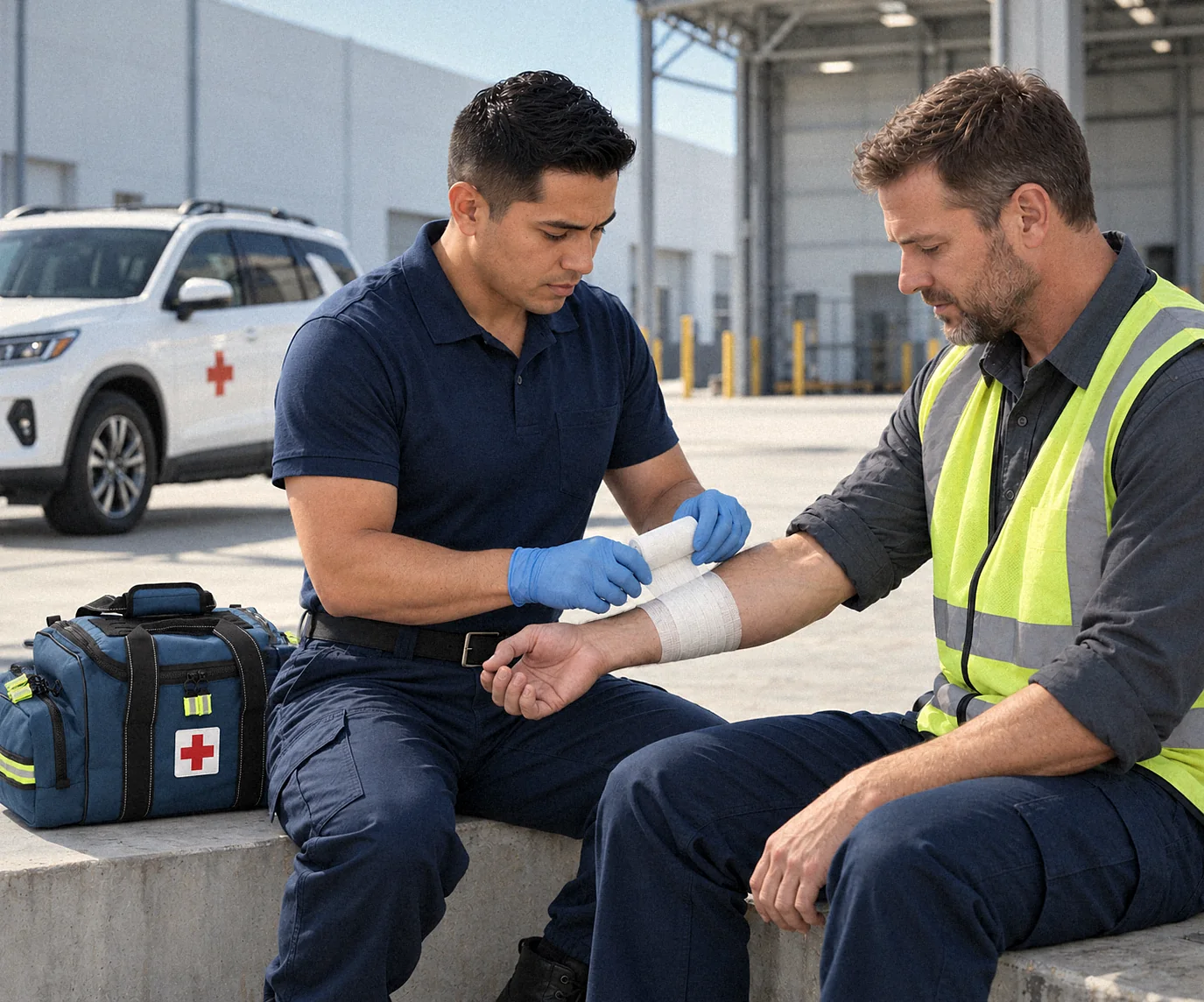
The supervisor made one call, and a first-aid technician arrived at the well site. The technician assessed the cut, controlled the bleeding, and checked movement, sensation, and circulation in the hand, along with signs that could point to something more than first aid. The technician then appropriately cleaned the oil and grit from the cut, brought the edges together with wound closure strips, and applied a sterile dressing.
The outcome
The injury was managed with first aid on the worksite. At the employer's direction, the employee continued working, and the crew finished the job on schedule. No one had to leave the worksite.
Why it mattered
The employee received appropriate care right where they were, and the rig didn't sit idle. Instead of a long drive from a remote site to an off-site facility, a possible lengthy wait, and care that could turn a minor injury into a bigger deal, the injury was managed with first aid on the worksite.
This is a composite scenario based on the types of calls first-aid technicians handle. Details have been changed and don't describe any specific person or company. Every injury is different.